I have been out for a while. Many things happened, many projects, adventures, ideas, and struggles that prevented me to continue this very special blog, talking about watches and collecting watches.
I am pleased to let everyone knows that, from this month onwards, The Column Wheel will be merging with my new main project outlet, Taltos Collections.
At Taltos Collections, I will continue to talk about watches, vintage and modern models, and the ideas behind collecting. But, along with that, I will be sharing my other passions, mostly still connected to collecting and gathering things, stuff, objects, paraphernalia. Meaningful paraphernalia, it has to be said.
What is the difference, however, between hoarding and meaningless stockpiling, and careful curation and intentional collection? That is one of the things I wish to discover, through my own activities, interests, and through the writing down and discussion of the ways I bring things into my life.
From watches to guitars, from books to projects, from video game achievements to video game consoles, for me, collecting is nothing less than a marking of one’s journey, a selection of stuff – as Daniel Miller calls the physical and immaterial iconic items we encounter in our paths – that creates and belongs to matters of meaning.
Yes, I write quite loquaciously, quite eloquently, perhaps a tad virtuous and esoteric at times. But that cannot be avoided, sadly, as I am an anthropologist. Thinking back, because I am an anthropologist, swaying through other’s stories and attempting to elaborate and investigate people’s lives, things, and spaces, I do feel attached to a feeling of curating, that being material or immaterial items.
I hope you all find it interesting, and wish to follow that journey in this new home. Follow the link below to Taltos Collections.
I have stated many times how I started my interest, and then collection. It is a common journey. From not being interested, to having a first watch, then the first mechanical, learning and discussing watches. Up to this point I have always bought watches I found in the wild.
I would go to an AD, or vintage market, or even just browse on the internet, and a random watch would catch my attention. Apart from my grail watch, I had never had a list of watches to be brought into the collection.
That was true until the very end of last year. We were preparing and organising our trip to Japan, and I was just trying to get myself familiar with the terminology, locales, and types of watches I would go look for during time in Tokyo and Kyoto.
Seiko and Grand Seiko are my favourite brands. Very affordable and varied for the former, and perfect precision and value of the latter, they have always been on my radar, since my very first mechanical watch. Whenever I am bored, I end up being lost in their websites. And during one of those instances, I have found my next watch.
At this point, I had already bought my Seiko Presage Fuyugeshiki, Seiko’s annual limited edition, and had that in the back of my mind. What would be Seiko’s new Presage for 2020? I was browsing Seiko’s British site, and then moved to the Japanese, just out of curiosity. And there it was.
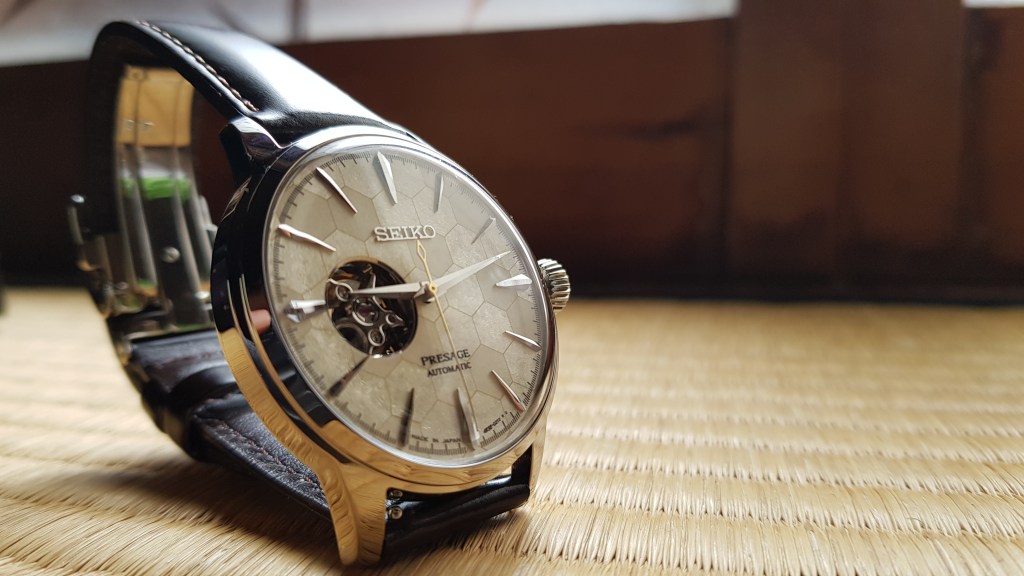
The Seiko Presage Limited Edition for 2020, the Honeycomb. I have never wanted a watch so fast and so intensely.
The Presage line is one of the most important lines for my collection. Other than being really well made watches, they are also highly collectable, quite affordable for an entry level luxury item, and it very use to use and understand its mechanism. It is the perfect entry stage for a beginner collector, like myself.
The dial is the one of the nicest I have seen. It is at the same time so complex and full on, with a honey-caramel, hive pattern, and simple and to the point, a combination of colours that somehow merge together in a brilliant design. The open heart, a controversial addition, in my opinion, is a fine complement to the overall simple and technical approach of Seiko.
As every Presage line, the Honeycomb is also based on a drink made at the Star Bar in Ginza. Nothing out of the ordinary up to this point. However, the Honeycomb is made with a very special kind of honey. It comes from the Ginza Honey Bee Project, a development that works on creating and collecting honey from the top of Ginza’s district buildings.
The Ginza Honey Bee Project, also knwon as Gin-Pachi, is a project that aims to develop a better atmosphere in the middle of Tokyo, by developing and taking care of honeybees, one of the most important agents in the continuous survival of nature.
The project collaborates with many institutions and companies, and Seiko is only one of them.
I wanted to get that watch. But not just that, I wanted to make that an eventful day. And for that, I decided that we would go to the main Seiko boutique in Tokyo, Seiko Dream Square. A dream indeed. The Dream Square functions as both a museum, an art exhibit, and a boutique, showing all the new releases, past headliners, and history of the most extraordinary creations. It is a place for both Seiko fans and non-fans alike. Their history is so full, and their work towards craft is so profound, that whoever is not deeply in love with that mindset, needs to at least respect and acknowledge such intent.
Not much to be said about the watch per se. Nothing that goes out of what is expected. Clear design, flawless execution, simple and precise movement, open back case, in addition to the open heart, showing the inner workings of the mechanism, makes this a great watch, a great Seiko.
I have spent quite some time talking about the how and why I came to buy this watch, but not so much about its technicalities. Well, there it goes.
The case holding the movement and the dial is the regular high polished stainless steel that one can find in all Presage pieces. At 40.5mm, it sits quite flush in my own wrist, and the two leather bands are quite comfortable and easy to swap.
But honestly, technicalities are mainly that. They are technical features that makes the watch work. They are impressive in many ways, and sometimes, depending on the watch, they are the main feature. But for me, at this stage, the stories around the watch are much more important than what the watch can do. Even tough this watch does quite a lot, with little to none setbacks.
PS: and I had to bring some of the Ginza honey as well.
There are a few ways to tackle watch collection in my opinion. You can go and start buying the latest releases of the big luxury brands; you can go an find budget alternatives of the most famous and known timepieces; or you can go to the vintage/antique/old watches, and try your luck in hunting for a hidden gem in antique stores or vintage markets in wherever you live, and those are just a few of the possibilities. One can even do a mix of all the available possible scenarios.
I follow many YouTube channels, many Instagram accounts, and most of the time those accounts have a very specific path. You need cheap alternatives, you go to Just One More Watch; you want to know about the history of high horology, go follow The Urban Gentry; you want to learn about impossible pieces to find and unattainable limited editions and special releases, that’s Hodinkee’s role. I still haven’t found my niche, but I know I do like a few things: to find limited editions of affordable watches, and to collect small, unknown vintage pieces.
Actually, the vintage hunt was what brought me back to the whole watch collecting that I am doing now. I have started my watch collection last year, when I found a very interesting and odd watch in a vintage and antique market. At the time, I had no idea what that piece was, but eventually I learned that it was an early 1980s Seiko 5. It struck me so much, that that same day, as soon as I came back home, I decided to research and find more information on the watch. Many months and many watches later, I included vintage markets as essential tasks during my weekends with my fiancee.
Also, besides the markets, I found a quite interesting resource on the internet. However, that offers a small danger, the possibility of refurbished, not original reassembled watches, with modern or not correct parts and pieces. I have both the original, actual old and used Seiko 5, and the refurbished, FrankenSeiko (is that a thing? maybe it is) in my collection. And in my eyes, both have their roles and values. The former, a true, original piece of history; the latter, an attempt to maintain original pieces, supported by wrong, weird, and unoriginal cases and straps.
What are vintage watches then? I am still trying to learn what those are myself. Based on discussions about it, vintage watches would normally follow a few specifications: it needs to be older than modern watches, and at least being of two or three iterations earlier than that of the contemporary pieces; it needs to have been valuable at the time it was made and acquired, either by rarity, heritage, brand, or materials; it has to have some sort of story behind its provenance; it needs to feel like a wearable watch, independent of era; and finally, it needs to be able to hold its value further through time.
How is my experience and agenda with vintage watches? I try to look for at least two or three of those characteristics in a watch. I might find a really pretty piece, that I would happily wear, and that has some provenance, but not necessarily it would be an investment watch. Or I can find an interesting, cared for piece, from a old renowned brand, that would definitely hold its value, but is not a rare find or a history-changer.
For example, one of my most interesting latest finds was a Rodana wristwatch, dated from the 1940s. It is a beautiful piece, with a salmon/copper dial, small seconds at 6 o’clock, working, manual winding mechanism. That ticks a few of my needs. It is wearable as a dress watch, it has provenance, it is a rare find, from an early century brand that does not exist in its format anymore, and it can definitely hold its value if I want to push if forward. Not an investment watch however. I can put a mark up on what I paid, but I will never be able to sell that for a thousand pounds. In this case, this is what I like to call a high-end mover, rather than an investment. It allows me to gather more cash for more small pieces, but it will not support the whole collection for a large period of time.
Another example is the watch I bought the following week. It was a really nice looking, gold plated early version of the Seiko 5. Very wearable, a little beaten up, but nothing that would detain daily use, movement is working well and keeping time, it is not a modern Seiko 5, it is for sure a historical piece, but not a rarity, not highly valuable, and in the grand scheme of things, it would either be wore by myself or used as a low-end mover, meaning, will be small cash for same value watches, or build up for a more expensive one.
Both those watches are very collectible, very interesting, and definitely worth of been called vintage, even if for quite different reasons.
Another type of antique, vintage watches are pocket watches. The concept of pocket watches is already a “vintage” idea. Pocket watches were the norm, and until the early 20th century, only women would wear bracelet watches. In fact, while men’s pocket watches maintained its form and function, women’s timepieces had an enormous creativity on their production, design, and materials at that time. And through the needs of the military, and Cartier’s insight into producing timepieces for men’s wrists as well, pocket watches became obsolete. However, they are still interesting, and many brands still produce pocket and chain watches as part of their company’s output. Vacheron and Patek for instance put their most intricate and complicated pieces into pocket watches (yes, one offs, but still…).
There are so many ways to go by hunting for vintage pieces. I love finding cool pieces that tells a story, that I can use, and eventually I can push them forward for another one. I am not at the stage of looking for the antique Patek, or rare Rolex, or historical Blancpain. I will keep gathering cool watches such as the Seiko 5, or Rodana, or Longines, or Tissot, or Hamilton, and will be quite happy.
Japan has been a destination for me since I was really young. My first ever connection with Japan was through video games. Besides a watch and guitar collector, I love video games, especially Nintendo, and at Christmas 1992 or 1993, my dad bought me a Super Nintendo, with Super Mario World. And that was the first step into an obsession.
After that, it was anime. Gundam, Saint Seiya, Dragon Ball, Ghibli, Akira, the Japanese style animation just blew my mind, and it is until this day, some of my favourite movies and TV shows of all time. Then it was music, guitars, history, design, aesthetic, and watches…yes, I do like Japan. And finally, this month, I had the opportunity to travel to Japan for the first time.
A lot of planning, organising, almost cancelling the whole thing because of the Coronavirus (in its infancy at the start of February, when I actually went), and expectation came to its climax on February 9th, 2020.
Tired, sleepy, and eager to begin our journey to the the land that I have travelled so many times in my dreams and through my hobbies.
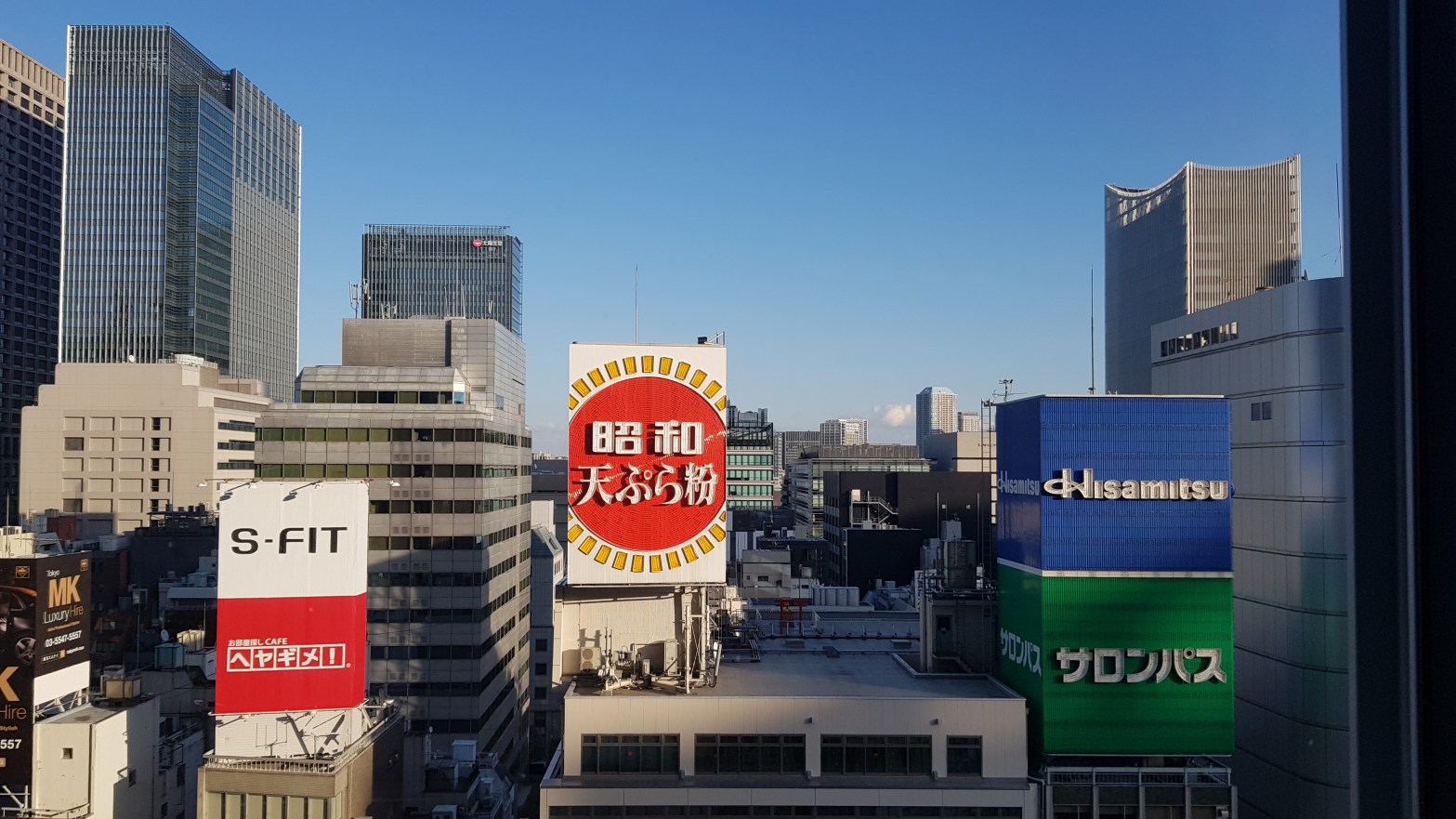
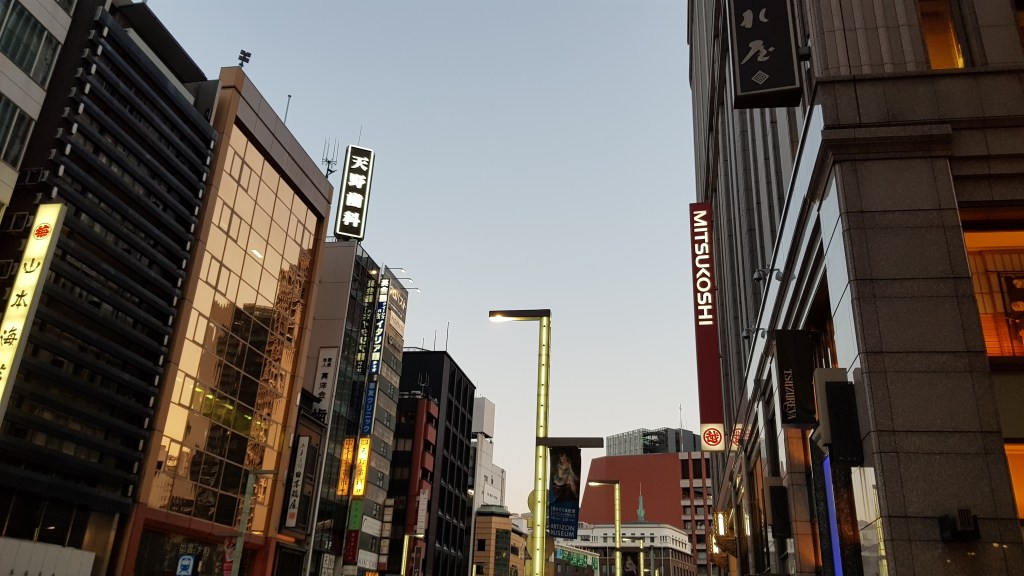
My plan for this trip, my first, was to be a taster, a trial of the waters, to understand the place, more of the culture, the environment, and to try and find the spaces I have planned to visit. My goal was to visit the two places that makes me love Japan: Akihabara, for video game, anime, and music, and Ginza, for watches, Seiko and Grand Seiko.
I have established a budget, looked up models, checked out stores and boutiques where to I could find interesting pieces. Have plotted paths, assembled maps, and put too much effort on minutia so I could see, touch, and feel everything I wanted. And then, travel happens.
But not in a bad way, not at all. Even though those were my goals and objectives for this trip, a watch hunt, anime and games galore, the reason for going to Japan was to spend time and to have an incredible adventure with my fiancee. And for that reason, plans and minutia give space to fun, discovering, and an amazing journey for both of us.
I couldn’t see a tenth of what I planned, but I can assure I had so much more fun and enjoyed so much more discovering Tokyo and Kyoto with the person I love. Of course we managed to find really cool things. Watches for me, textiles for her, and art and resources for both of us. But doing the unplanned is definitely more fascinating.
Nevertheless, I managed to find very special watches to add to my collection, some quite interesting places to look (and buy if you can) high quality timepieces, and unusual and unlikely vintage and second hand stores with random watches just lying around there.
Throughout the whole 2 weeks we spent in Japan (Tokyo and Kyoto), I have bought 3 watches, all 3 new, no vintage ones this time (even though I almost got an Omega Speedmaster for less than a thousand, and missed because of not acting fast enough). Each one of those watches were bought in completely different places. One in an official boutique, one in a department store with an authorised watch dealer at the ground floor, and the last in a shopping mall, in an authorised store. Every one of those experiences were completely distinct from the other, and each one of them taught me at least something new and useful for my watch collecting journey, that I will carry trough my whole life.
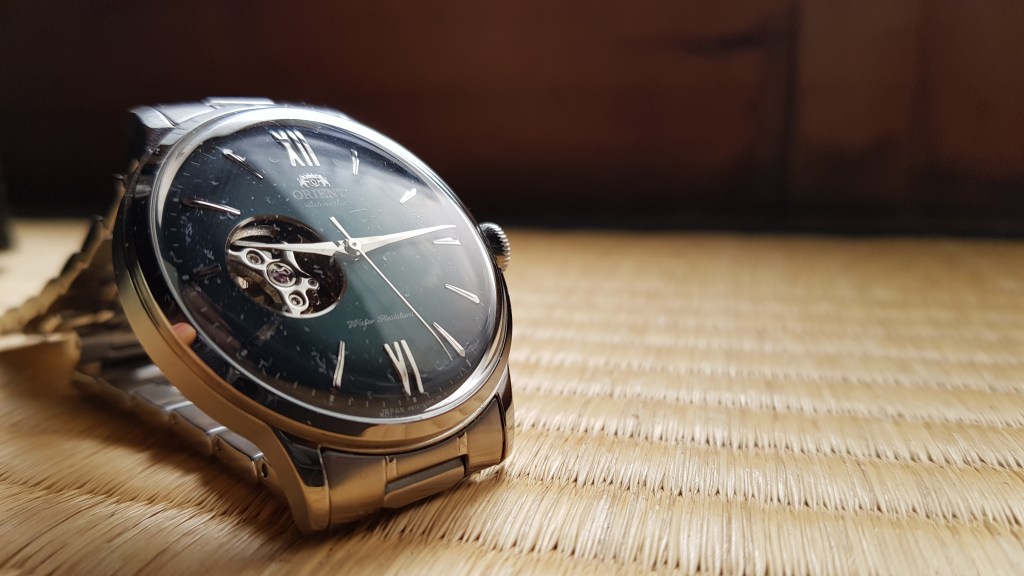
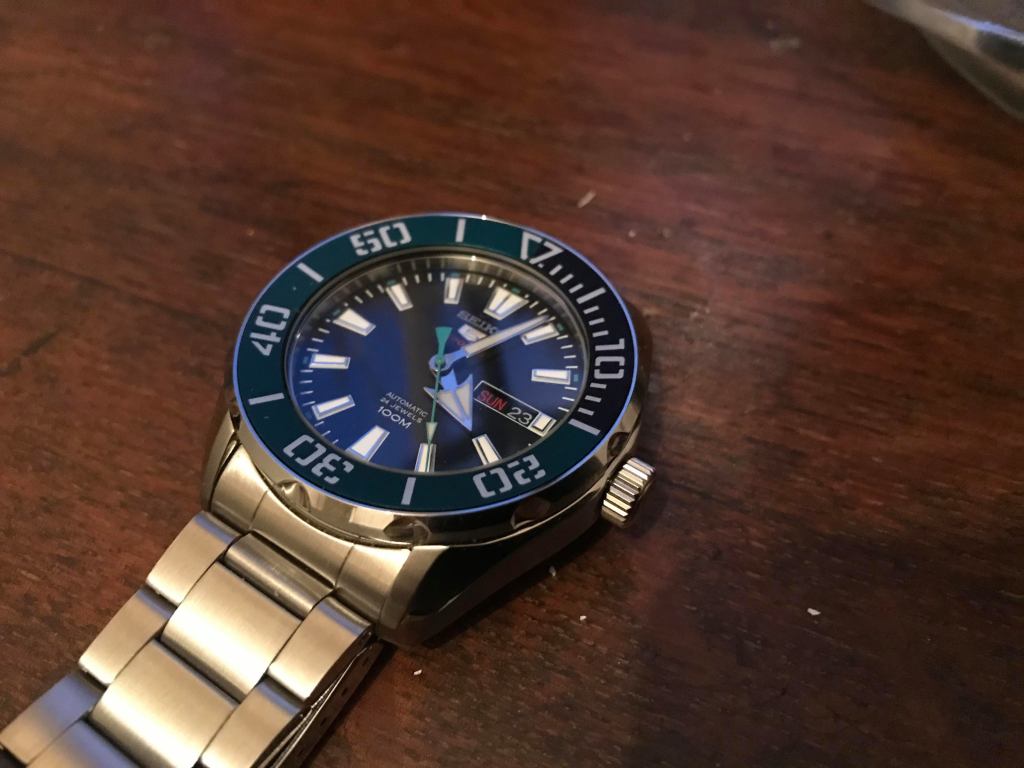
The first watch I bought was an unexpected buy. I never knew I wanted an Orient, and have just found out when I saw one new in person. The watch itself is not anything special on itself. However – and I will go through that in a separate post – I have met and talked with the staff and spent a lot of time discussing watches, creating connections, and making new friends. The store had a quite small collection of watches, and went from Rotarys and Citizens, to Frederique Constant, Omega, all the way to Cuervo y Sobrinos (the first time I tried and touched a Cuervo in person), and Orient. Orient, for those who don’t know, are a subsidiary of Seiko Epson, and looks and feels like its bigger brother. However, and I don’t know exactly why, it has its own identity and personality, and I found that to be the perfect watch to be had as a fun and nice memory from a late afternoon in Tokyo looking for watches. A Japanese, unusual and low profile brand, just like the store I was in. The second was the beautiful Seiko Presage Star Bar Limited Edition for 2020, the Honeycomb. That was a watch I have planned to buy as soon as it was announced. It was the one piece I would definitely need to have when in Japan, and buying that after visiting the Seiko Dream Square, in Ginza, was a dream come true – pun intended. And the last was a Seiko 5 Sports SRPC53K1. That was more last moment purchase, and I wanted another watch, but not a dress watch. It was quite cheap, and having a cool looking, chunky diver’s watch has crossed another item on my checklist.
I have also found some very interesting and fascinating magazines and books on horology, collections, and watchmakers. I brought two amazing books, but came back regretting not buying more, which I didn’t because we have ran out of space on our luggage. One of those magazines is a really detailed and amazingly illustrated history of diver’s, military, and pilot watches, depicting the evolution of pocket watches, and the move to wristwatches, from the ladies’ timepieces, to the strapping of pocket watches in leather wristbands for easier legibility and use. The other is a interview/recollection of influential people in Japan, talking about one of their favourite watches of their collections. Both quite unusual and interesting, which will be definitely add to the library.
Overall, this trip was quite full, and it was a taster for Japan. There is so much to see, do, and discover, and in 2 weeks, there is just no way to try and do everything. I was so happy to be able to visit such an amazing country, and to bring 3 very special in their own ways Japanese made watches, Japanese books, and a lot of knowledge and experience for the next time (and I bought a Gundam too).
A couple of days before I embarked to my first visit to Japan, and to do a small watch hunt while I am there, I posted a poll into the Grand Seiko owners Facebook group. The poll asked how many watches is the acceptable/ideal number to bring in a trip. I was asking myself this question while packing up for.Japan, and felt that a bit of feedback from people who own, collect, and obviously travel with watches would be more than welcome.
The response was overwhelming, and I was really impressed that my post was so interesting and fun for so many people.
Almost 200 people joined and voted, commented, and interacted, and for that I thank you all very much.
On the results, I was impressed that many people answered that they would travel with only one watch (108 votes). The most prominent comment on that was that for a short trip, a single watch would be more than enough, even though there were a few comments which stated that if a trip would last longer than a week, they would definitely include a second timepiece. One very interesting comment defending bringing only one watch was that it would be a good opportunity to bond with a particular piece. I found that quite meaningful, and depending on the watch, I can absolutely agree with that. To not having choice, you can find more things to like and enjoy about the one watch you brought along to your holiday escape.
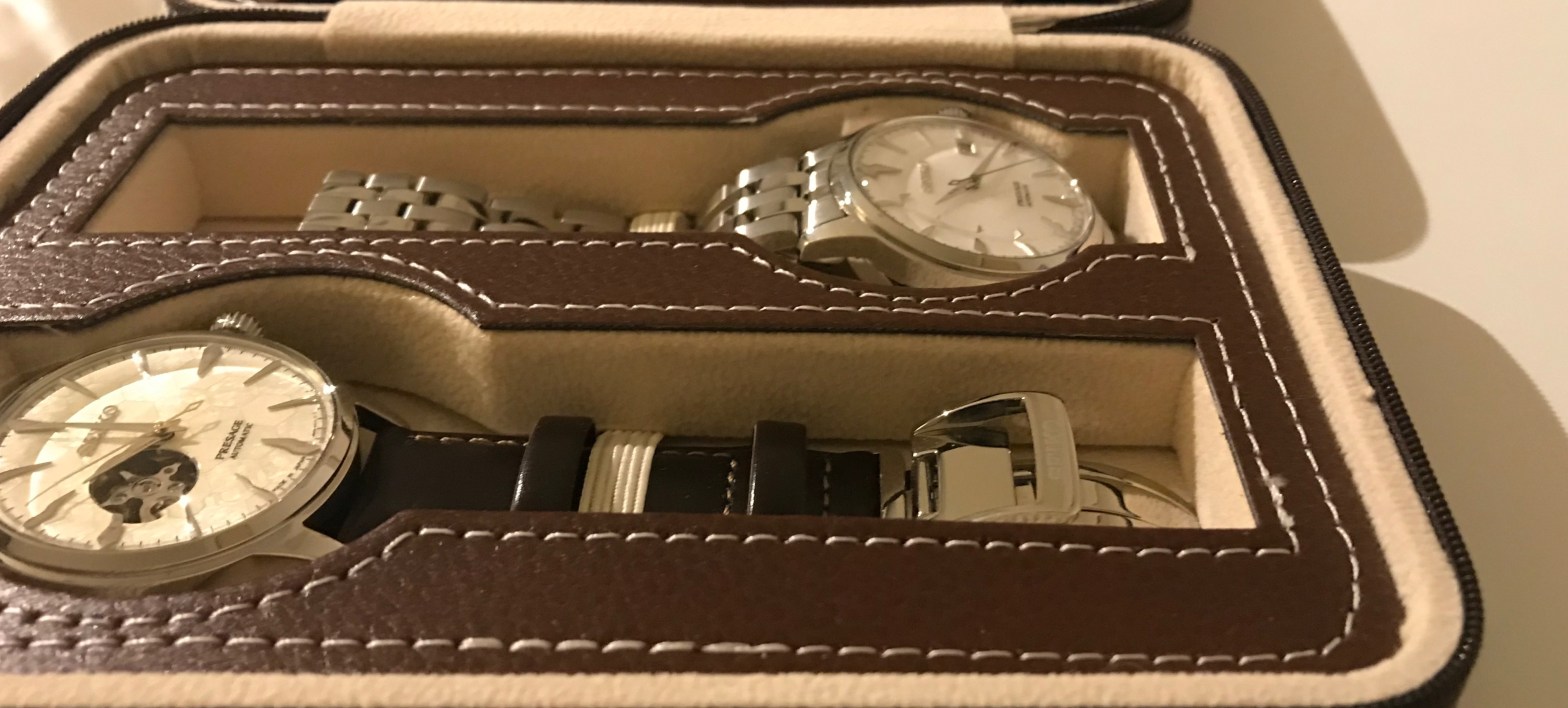
Another big part of the votes showed that bringing more than one watch is actually quite common. Voters said that they would bring 2 to 3 watches to travel with (51 votes), or even more than 3 (10 votes). For my first trip with watches, I ended up falling into this slot. I have decided to bring a digital, cheaper watch (my Casio World Time) and a more classy, dress watch (a Seiko Presage Fuyugeshiki limited edition), for a broader choice, from a more casual and relaxed look, to a more formal, dinner style. I made sure to bring a newly purchased watch holder, with 4 spaces…just in case.
And that was a good move. That is because many of the people that voted also commented that they were having a very strange problem: they would go travel with one or two watches, and on the way back they would have other watches popping up their luggage and watch cases. I have also suffered from this situation. From two to five.
In the end the conclusion is clear…do what feels comfortable, bring only watches you will definitely use, and do bring a case with free spaces for eventual newcomers.
Whenever I think about buying a new watch I follow one of two paths. I either go looking for vintage watches, on ebay, vintage shops, antique markets, anywhere you can find them, or I venture into a very dangerous place, full of pretty things: the Grand Seiko website.
Just to clarify, that does not mean I buy GS’s every now and then. Not in the slightest. While I can find really cool, interesting, and sometime unique watches in antique markets for a very friendly price, when I visit Grand Seiko’s web space, is to look into the possible future, is to be fascinated by the precision and artistry, and to droll all over my keyboard, waiting for the day I will be able to have my own Japanese perfect snowflake.
Yes, my most sought after timepiece, my grail as it is called in the watch conversation circles, is not your normal Rolex, Omega, AP run of the mill. My perfect watch is, and probably will be until the day I found it, the Grand Seiko SBGA211, aka the Snowflake.
There is almost no need to talk about the Snowflake here. There is so little to scrutinise that is has not yet been scrutinised by other major outlets such as Hodinkee, Watchfinder & co., etc. Everyone knows about the Snowflake, and knows why it is so special, amazing, and perfect. So I will just move on, and try to talk about another watch, that can be considered a student, a padawan of the great SBGA211, one that I like to call the “almost Snowflake”.
Seiko, for all that matters, is larger than Grand Seiko. In one way or another, GS is the child of the historical Japanese technological and artistic venture that is Seiko. And Seiko births not only my favourite watch, but also many other timepieces that do not carry the “Grand” on their dials. Within the many collections that Seiko has under its umbrella, the Presage is one that carries the more elegant, sophisticated, and classy characteristics. And going deeper, within the Presage line, there is what is called the cocktail collection.
Seiko releases very interesting watches under the cocktail collection, all based on drinks created at the Star Bar in Ginza, Tokyo. Each watch is inspired by one of those drinks. From Martinis to Stingers, the collection tries to embody the essence of the cocktail. And one of those special drinks, developed at the bar is the Fuyugeshiki.
Meaning “winter scene”, this cocktail is made of Vodka, cream, and lychee juice – not my cup of tea – and the watch aims to recreate the smooth, creaminess of the drink in its dial. And it ends up looking a lot like its more expensive brother, the SBGA211.
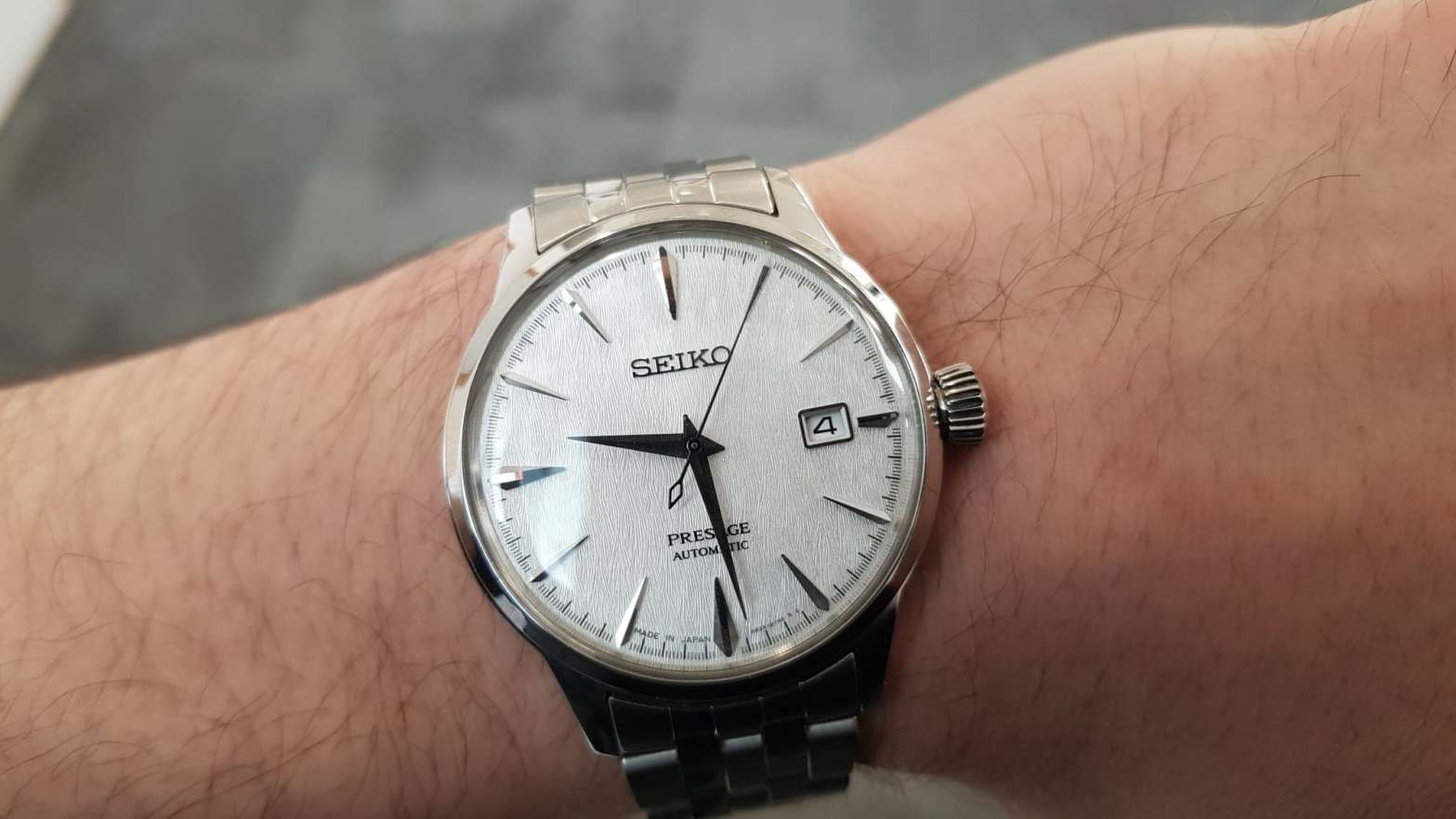
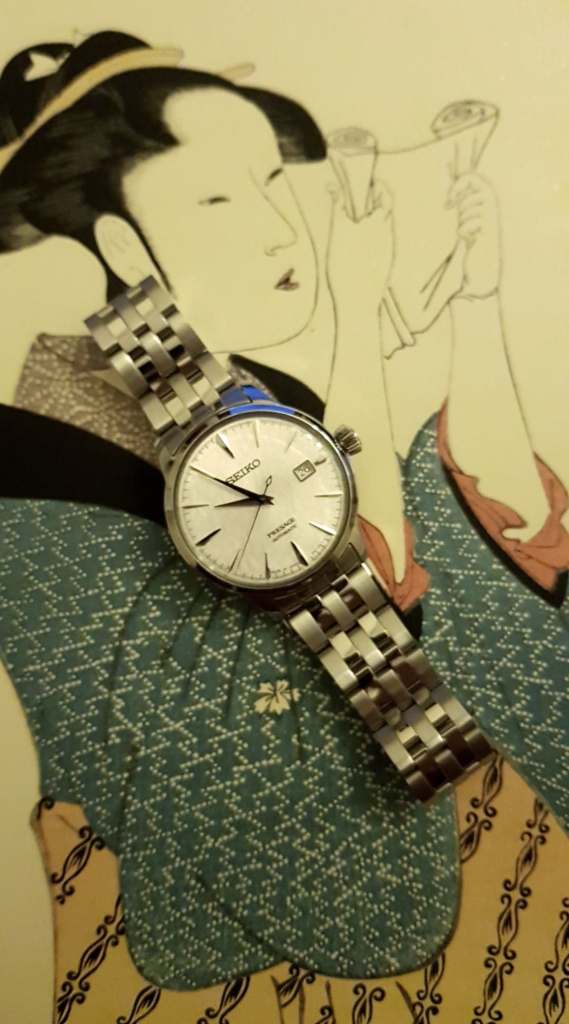
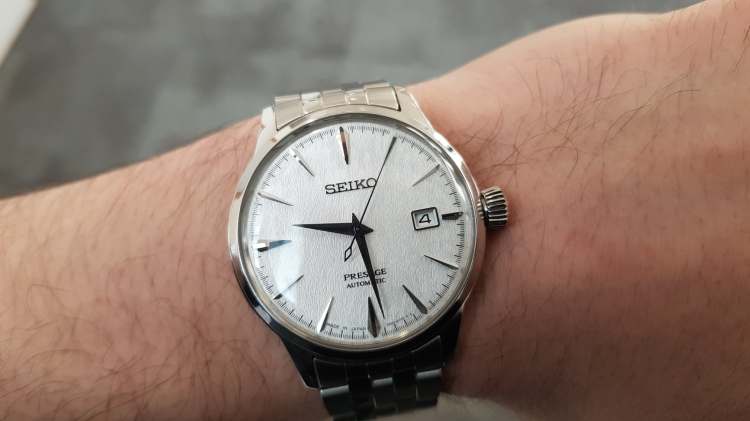
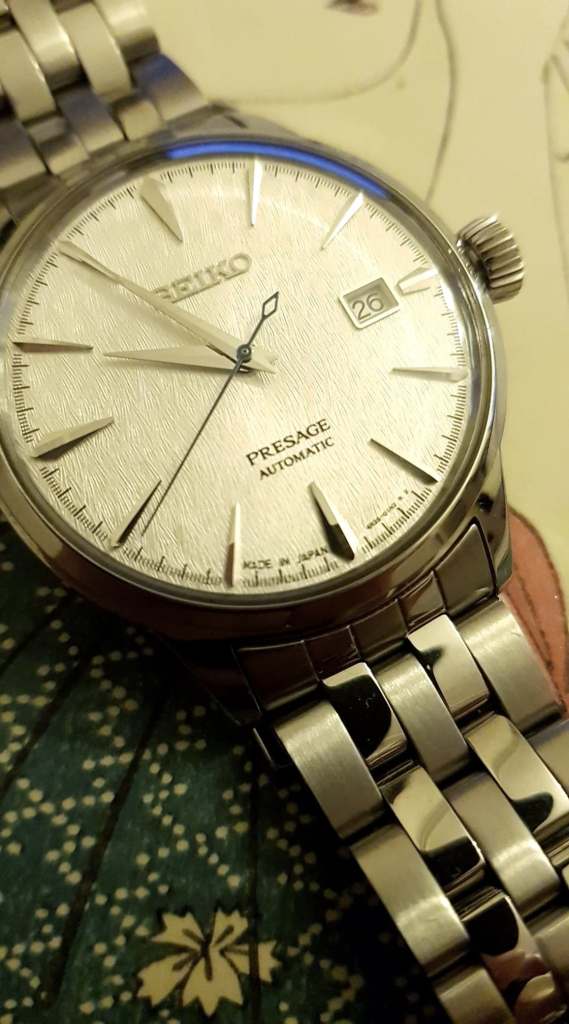
The SRPC97J1 – I have the date version, but it also comes in a power reserve version, and a ladies model as well – is simply beautiful. It is a limited edition, of 7000 pieces worldwide, and it could not deserve better the title of “almost Snowflake”. It has a clean and smooth white, matte dial, matched with high polished arrow head markers, a really simple but elegant date window, and high polished lance-like hands. A fantastic detail however, is the really sharp, steel blue second-hand, which differs so much from the shiny stainless steel, but at the same time, matches perfectly with the cold and cool style.
The dial. Well, the dial is the most amazing attempt to mimic the mastery of the Grand Seiko SBGA211. It is clean, smooth, but then you notice the grooves, and the patterns, and the waves, and then the whole scene just opens, and you realise that the thought, the care, and the design that comes from GS are all there. The only thing that is not, is the perfection. Not that it it not great. It is absolutely the most beautiful watch dial I own at the moment, and one of the most gorgeous I have ever seen, even towards the very, very high end of the spectre. But that is the issue. When you are aiming for perfection, you are only second to perfection. And I think that is the result here, an almost perfect, very well made, more good looking than most expensive watch out there, but it is a Snowflake in training. Which is not bad. It reflects the stage I am in on my watch collection and appreciation journey, a learner, trying to learn and looking up to the masters.
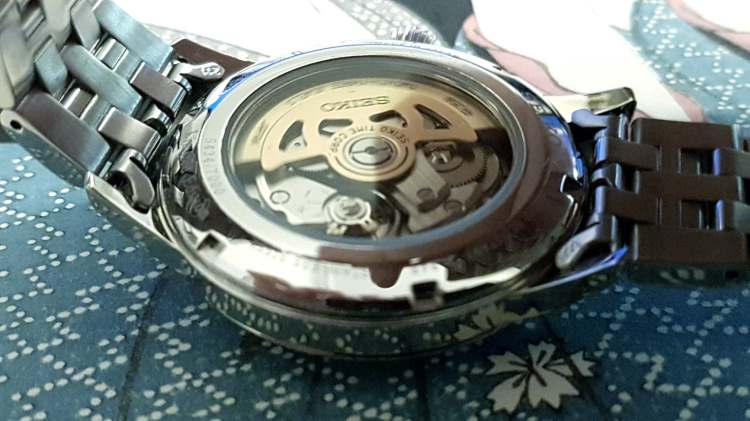
One of my favourite things on this watch is the open back case, or exhibition back as some call it. I know, the movement is not a highly crafted A. Lange & Sohne, nor it is a masterfully perfection of the Grand Seiko 9S85. However, being an watch enthusiast, every movement, even the most simple Miyota, is so fun and interesting to see at work. The calibre 4R35 is simple, do the job, but with a gold plated rotor, it turns into a fascinating movement to have and to look at. I sometimes find myself with watch in hand, just staring of the spring wheel turning and turning, and the gold rotor going back and forward. I think that is the most fun thing about watches, that every watch, if crafted with care, can create this feeling of awe and reverence.
I love this watch, and for me, it was the first step into the path towards my grail watch. It is a meaningful and thoughtful path, going from an affordable, well made Japanese Seiko, the “almost Snowflake”, to the glorious flawless master Japanese timepiece, the actual “Snowflake”.
Hope to come back here one day to talk about another Snowflake…
Grand Seiko is one of my favourite brands. Many people have their grail watches falling into the realm of Rolex, Omega, Patek, Ulysse Nardin. In the midst of Daytonas, Seamasters, Nautilus, and Freaks, my most sought after timepiece comes from one of the oldest watch and clock makers in the world, and the responsible for the quartz crisis of the 60s and 70s (even though the quartz mechanism was first introduced by Rolex, I know), Seiko.
More specifically Grand Seiko. Even more specifically, the reference SBGA211, also know as the Snowflake. It is such a marvel of technical achievements, design, and heritage. It is one of the most simple designs in watchmaking, and at the same time one that is full of masterful craftsmanship, care, and detail. Just look at the immaculate zaratsu polished case, and then grab a macro lens, and compare that with the amazing dial, mimicking snow, and then you will understand. This is without even going into the Spring Drive movement in this piece, a revolution in both quartz and mechanical movements.
Now in 2020, Grand Seiko as a independent brand, has reached its 60th anniversary. The number 60 is a very special number, both for the brand, and for the Japanese culture. In Japan, the 60th birthday or anniversary is called Kanreki, meaning circle, or cycle (kan), and calendar (reki). This corresponds to the belief that when the 60th year arrives in a lifetime, you complete a full cycle, and comes back to the year you were born.
Japan uses, besides the regular Gregorian calendar, the Chinese sexagenarian calendar as well. This was introduced in the country in 604, making that the first year of the 60-year cycle in Japan. In summary, the Chinese calendar counts the year based on the solar position, and each year corresponds to an animal. The mouse, the horse, the cow, the sheep, the tiger, the monkey, the rabbit, the chicken, the dragon, the dog, the snake, and the hog. There are 12 signs, plus the combination with one Jikkan, a measure of space and time, based on the position of the year within the cycle. When the combination of the signs and the Jikkan uses all the possibilities, the cycle is complete. Therefore, besides been a milestone on itself, the 60th anniversary of the brand is something quite special.
For that reason, is easily assumable that a special run of watches would be issued to celebrate this year. And the first of those special, limited editions is already revealed.
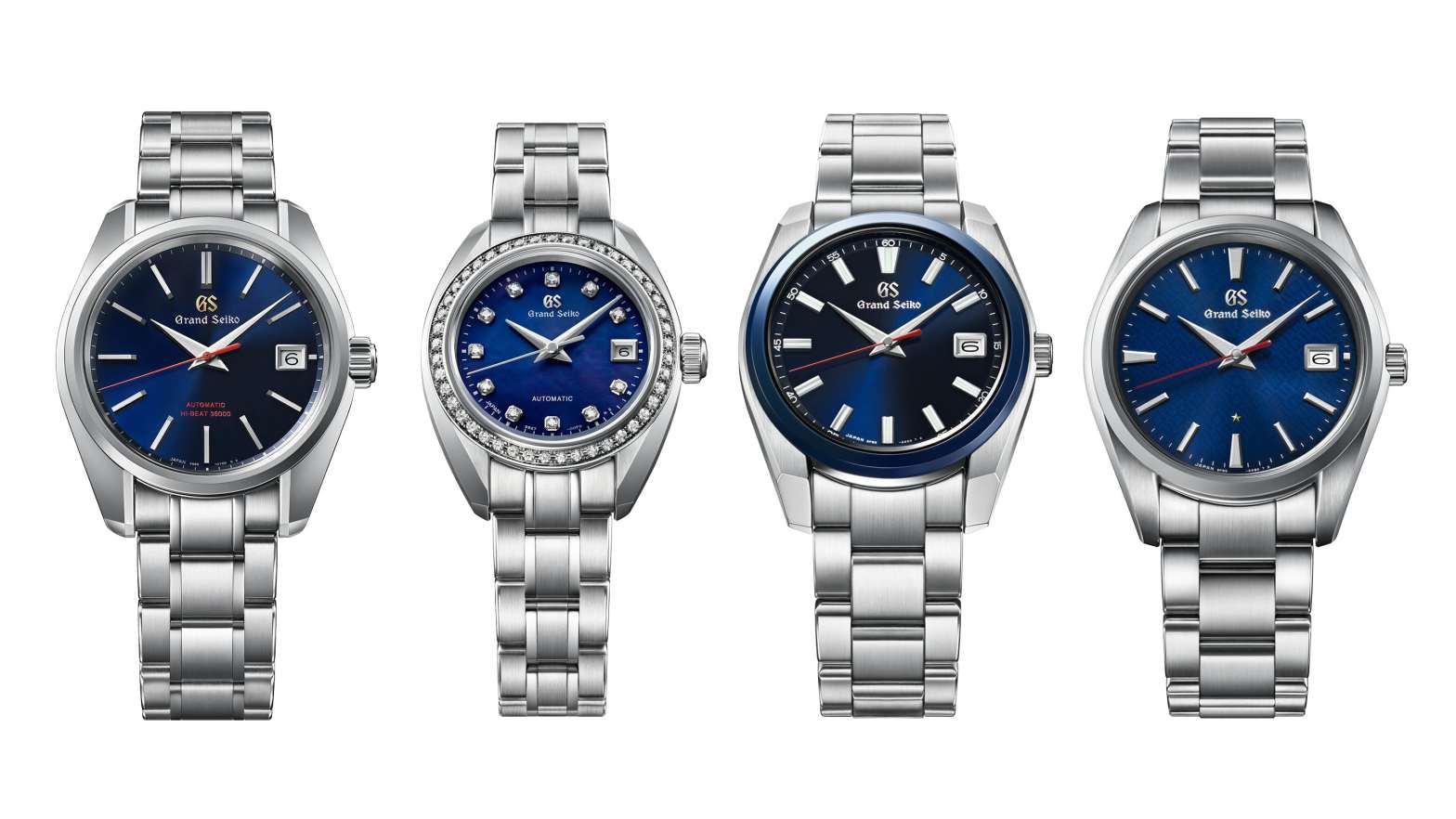
There are four pieces in this collection. One quartz, one Hi-beat, one sport, and one ladies. Each of those with their own unique set of design and technical details. I am now going into details about each of the watches configuration, which you can find on the Grand Seiko official website or the Hodinkee article.
As soon as I saw this collection, I had two realisations. One, that Grand Seiko really knows what it is doing, by producing amazing pieces, with full of craftsmanship and simplicity. And two, that many people would just not understand this move from GS.
I really love Grand Seiko (and Seiko in general) and besides the technological and mechanical improvement that the brand is responsible throughout its entire life, I fully appreciate and admire their approach to design. As I said, I love the Snowflake, and the four season special editions from last year are absolutely stunning, capturing the feel and presence of how Japan experience the move through the seasons. This collection, the first of the 60th anniversary, is what Grand Seiko does, and does to the highest levels: admiration for its own culture, its history, its identity. It is the simplicity that holds complexity, and in the “boring” approach, as many people are complaining, that one can see the reverence to the beginning of a new cycle, a new beginning, and a continuation of Grand Seiko’s philosophy, to create high technological timepieces, in inspirational, simple, masterfully crafted design. I don’t want to change anyone’s mind, but I do want to show my perspective on GS’s approach to its own anniversary. As the brand themselves say, it is a rebirth, a renewal of goals and objectives, its a new beginning that should look to push the limits of craft and art, and to reflect back to its full and grand history.
The amazing blue dials also represent purity, cleanliness, connected to water. It shows how Grand Seiko can make dials and bezels so full of work, and at the same time to clean, so pure, water-like. Besides, the blue also presents the idea of calmness, stability, the sense of completion and restart. That is also seen in this collection. A mix of tradition and history, and high technological features, design, and artistry.
That is what this first collection represents. The idea of a completed cycle, and a restart, a fresh beginning to a brand that is synonymous of advance technology on one side, and awareness to their own culture, history, and the stories that the Grand Seiko timepieces tell. This is not a time to show off, it is time to reflect on its own trajectory, and reminisce on its ideology.
A perfect start of a new cycle for my favourite watch brand.
Watches are one of those things that get people fascinated just by existing. For me, I really enjoyed the mechanics of the moving parts. It didn’t matter if it were quartz or mechanical, I loved to just turn the crown and see the hands moving. And to have such mechanisms on your wrist is such a novelty.
During my teens however, I didn’t have much interest in watches, been more into games and music. It wasn’t until the early 2010s, when I was on my twenties, that I fell for watches all over again. I remember sometime in 2010 or 2011, when I bought an annual catalogue of watches (it was probably the Wristwatch magazine), and started learning about mechanical watches.
Until then, watches were fiddly and cool gadgets to read the time and to look fancy. I had no idea what it was waiting for me. That magazine was my first step into not only luxury watches, but mechanical watches in general. It was through the magazine that I learned about Patek Phillipe, Vacheron Constantin, Panerai, and Ulysse Nardin. I recall flipping the pages, and every single time I did, my mind been blown away by the timepieces depicted there. Three watches really stuck to me: the Ulysse Nardin Freak, a Parmigiani Fleurier Bugatti Super Sport (reference PFH365-1001400-HA1442 from 2010), and a Breguet 7137BB Moon Phase. And after that, I have learned about complications.
Amongst all the complications, the Moon Phase is the most straight forward in terms of its functions. It shows the phase of the moon based on the internal calendar of the watch. If a annual calendar, one might need to adjust the moon phase once every 3 years; if it’s a perpetual calendar, just once every 1000 maybe.
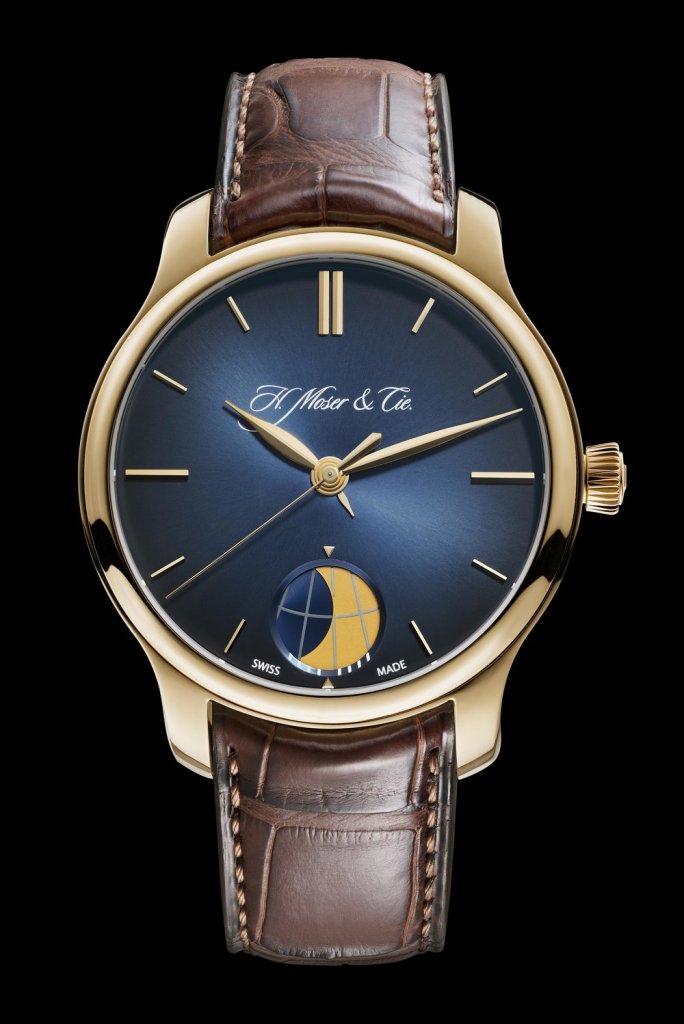
It is also the more visual and apparent. Even more than the turbillon or the perpetual calendar. A yellow moon, in front of a blue or black sky, right in the middle of the dial, nothing is more disturbing and so fascinating. And the mathematics behind this grand complication are phenomenal.
The full moon cycle lasts around 29.5 days, making it quite complicated to coordinate with the Gregorian calendar we follow on our normal day to day errands. For that reason, the cogs and mechanisms need to be precisely crafted, so the wheels can turn both the hour and minute hands in its 60/60 rhythm, as well as the moon phase, in its own pace.
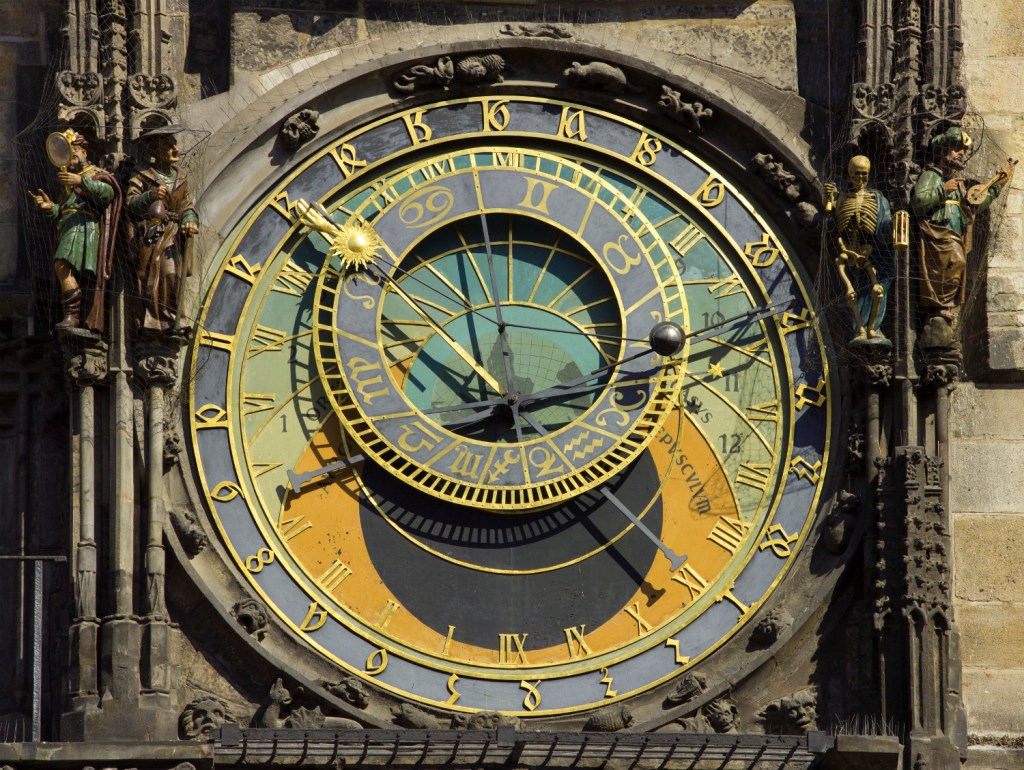
It is believe that the Moon Phase was first seen in human made mechanisms long before clocks, watches, and wristwatches. The Antikythera mechanism, a Greek invention developed over 2000 years in the past, was a tool used to predict and demarcate eclipses, lunar and cosmic movements, and try to understand the elaborated complications of the universe.
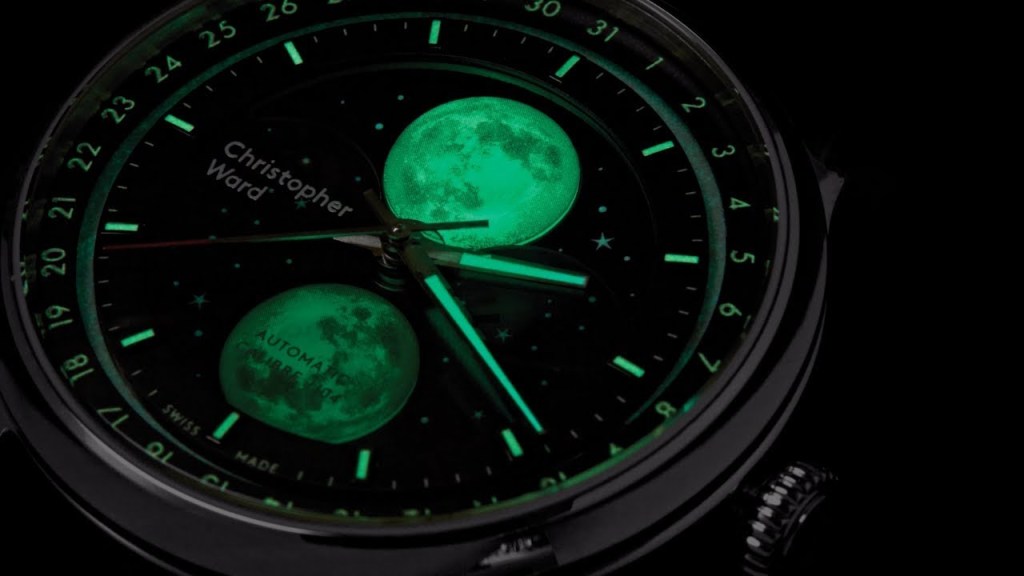
Not a moon phase complication per se, but definitely one of its earlier predecessors. Long after, the moon found its place into the watch dial, and since the 17th century, its own design and visual identity developed and evolved, based on the trends surround the industry. From fresco-like depictions, through the art-deco, to the realistic 3D-printed moon surface, this is for sure the most visual distinctive and malleable of the grand complications.
It is for sure one of my favourite parts of the modern mechanical watch, and a complication that can be appreciated by both watch enthusiasts and outsiders alike. Introduced by Patek Phillipe in 1925, this watchmaking classic finds ways to mesh with both traditional and modern watch models without been intrusive.
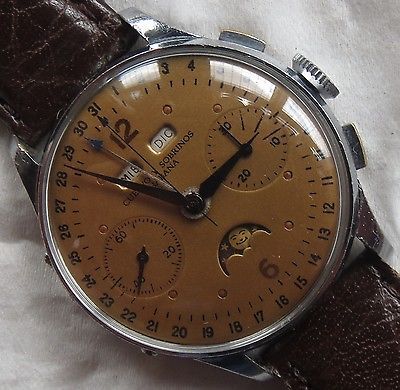
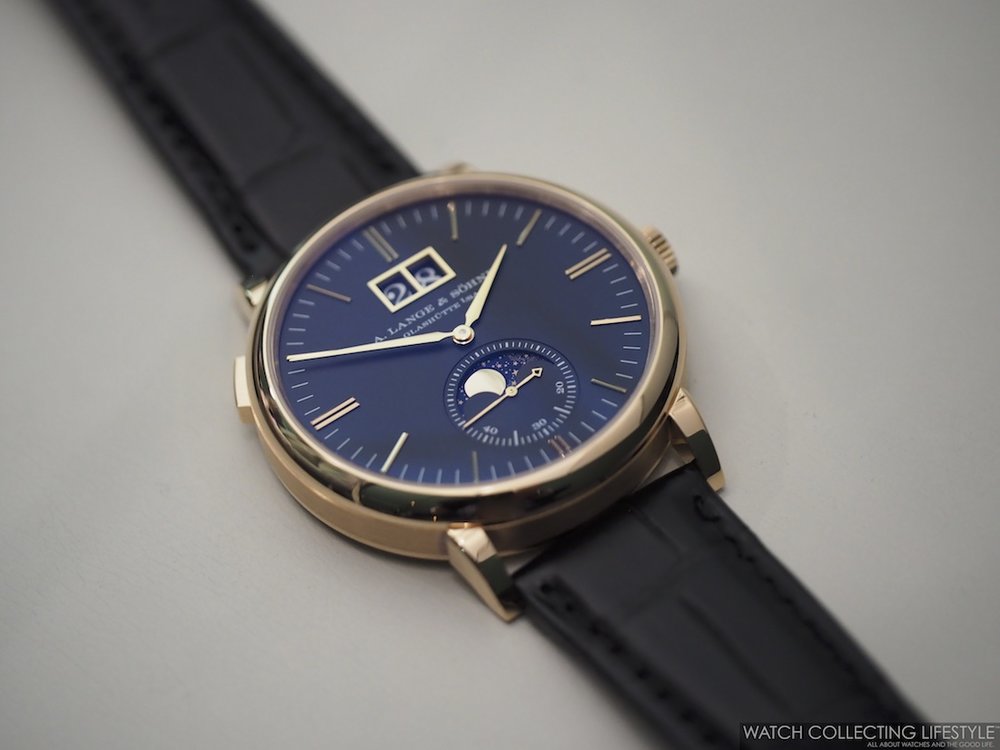
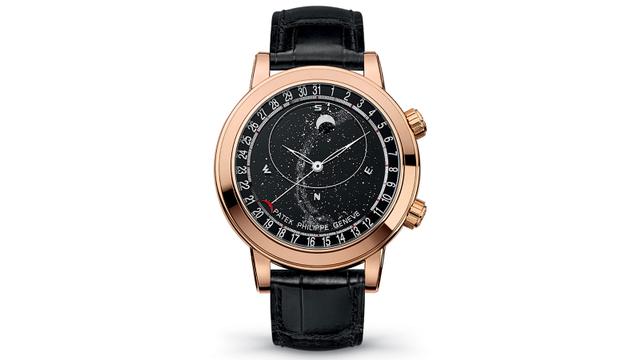
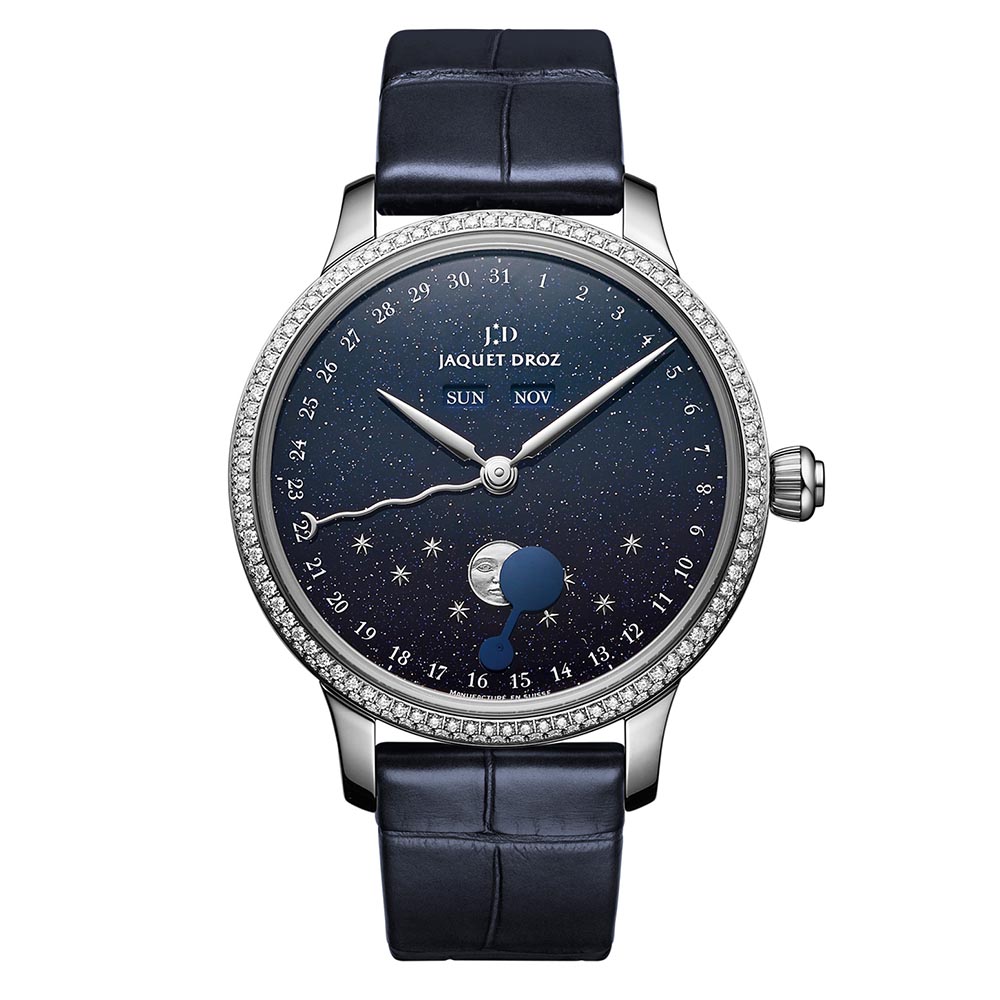
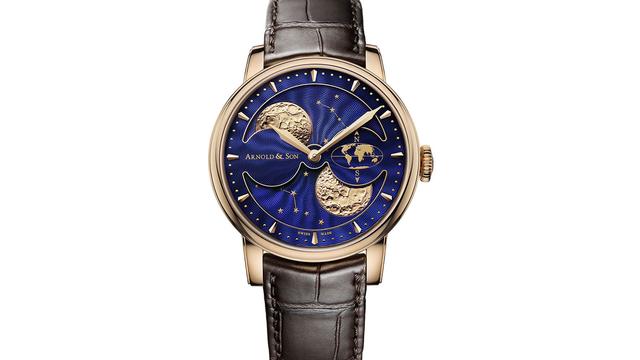
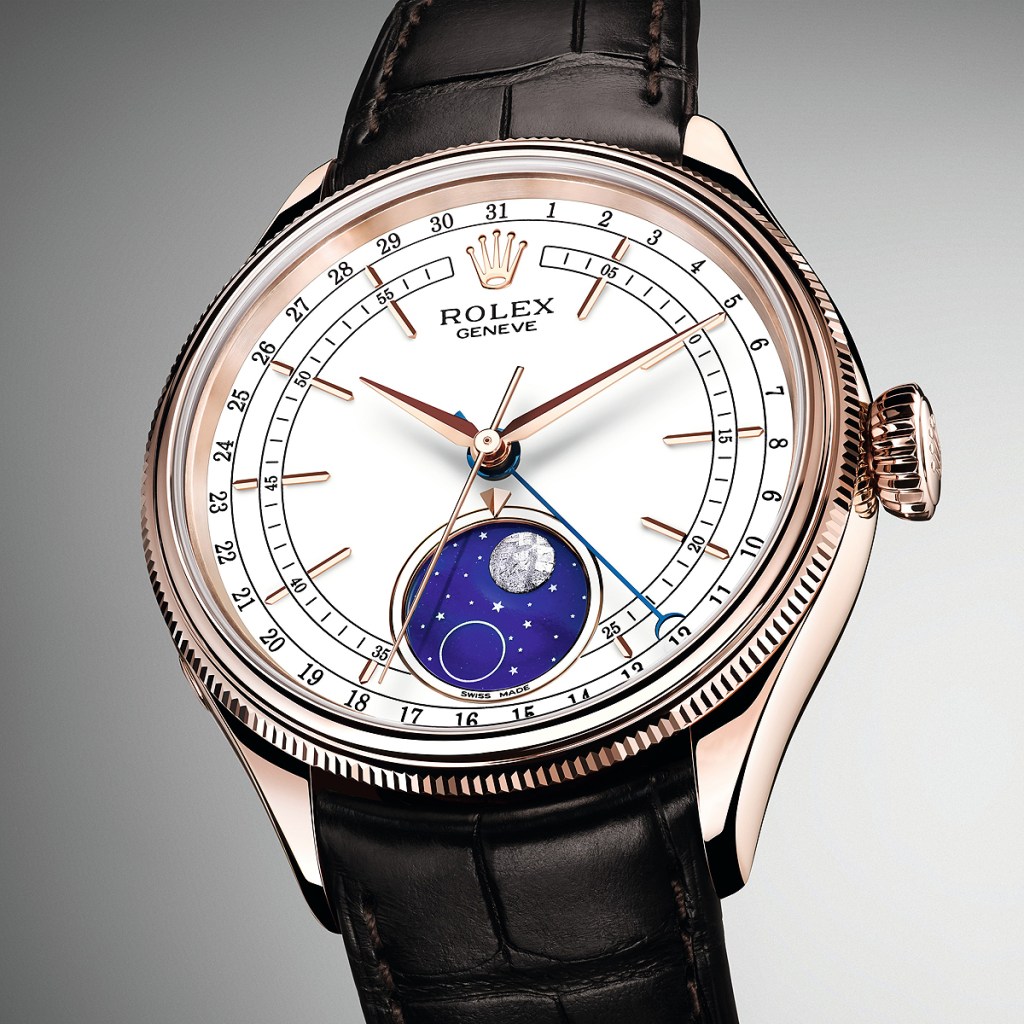
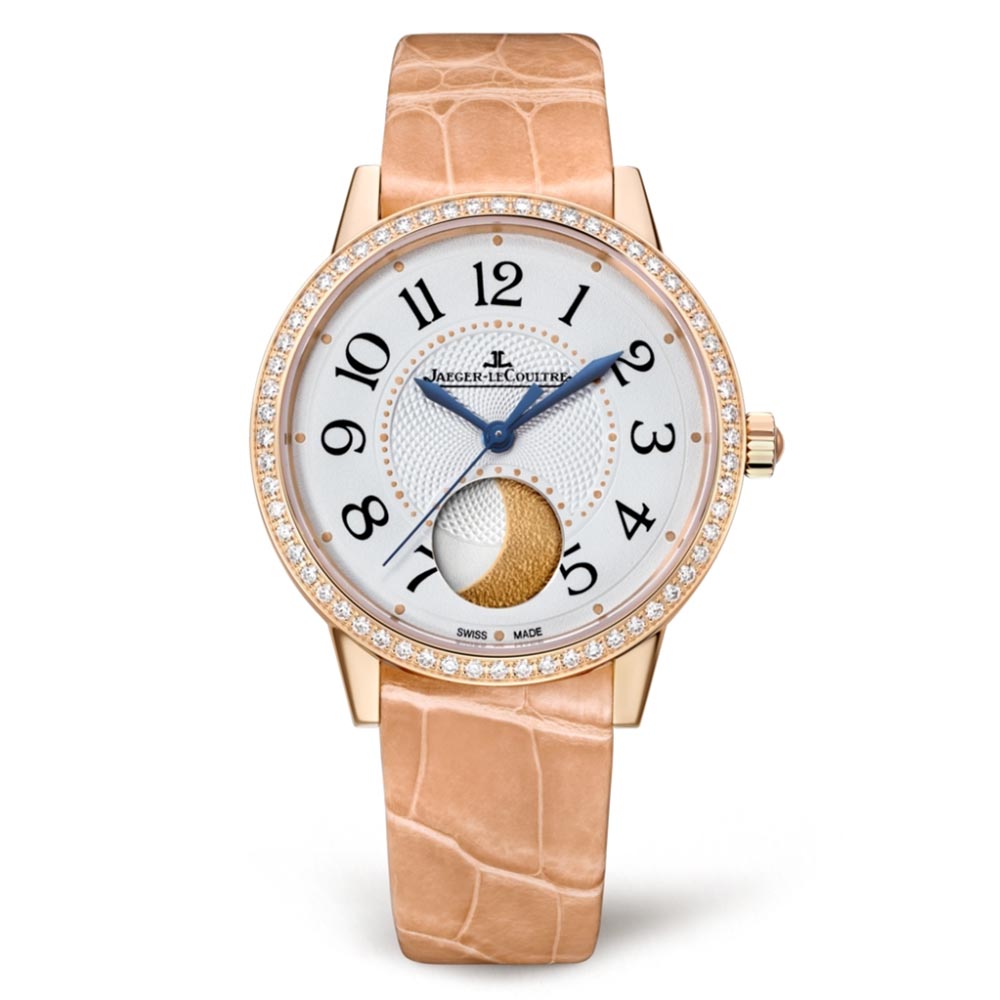
Here are a few examples of the moon phase, from the oldest working Astronomical clock, a very modern Patek’s interpretation, to the amazing Christopher Ward C1 Moonglow.
Pictures from left to right, top to bottom: H Moser & Cie 1348-0100 Blue Fumé; Christopher Ward C1 Moonglow; Cuervo y Sobrinos triple chronograph; Astronomical clock in Prague; A. Langue & Sohne Saxonia; Jaquet Droz Eclipse Aventurine; Patek Phillipe 6102P Sky Moon Celestial; Arnold & Son HM Double Hemisphere Perpetual Moon; Glashutte Original Panomatic Luna; Rolex Cellini Moonphase; Jaeger Le-Coultre Rendez Vous medium moon.
There are three possibilities that one will say those words. Number one, when you decide to buy your very first luxury watch, and you find a very reliable store on the internet that amazingly sells absolutely real, not fake Rolex for around £100, and then realise that those were not indeed real Rolexes. That did not happen to me. Number two, when you decide to go out of your way to search and find a place that sells luxury watches’ replicas for around £100 and then purchase a kind of look-a-likes, cheaply made copies of Submariners and GMT-Masters. That also did not happen to me.
I have however chosen the less likely and arguably less stupid option, by purchasing a fake Rolex. Let me tell the story.
I have been interested in watches for a long time, but have only started actively collecting watches quite recently. My collection is comprised by watches given by my parents and family members, by more affordable watches bought earlier in my life, and by a few of my Seiko watches, which are going to be the subject of a next post. And I have been also brought to be interested in vintage and antique markets, which can, at times, provide interesting sources for watch collectors.
My fiance was the one who brought me to the market, and to the overall interesting ventures into vintage markets as a whole. Been an avid collector as well, she was the one who showed me the quite magical environment of those fantastical spaces.
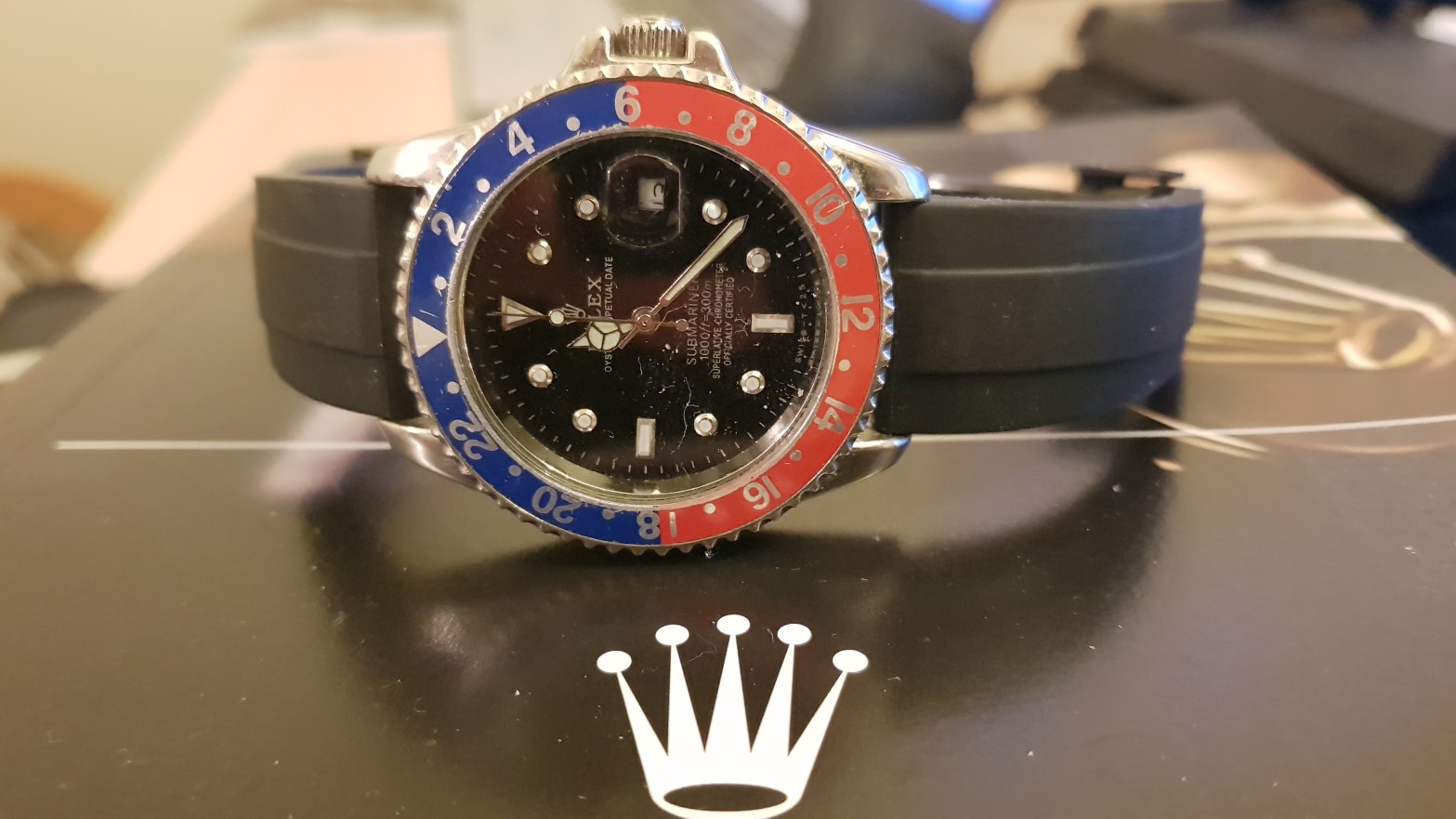
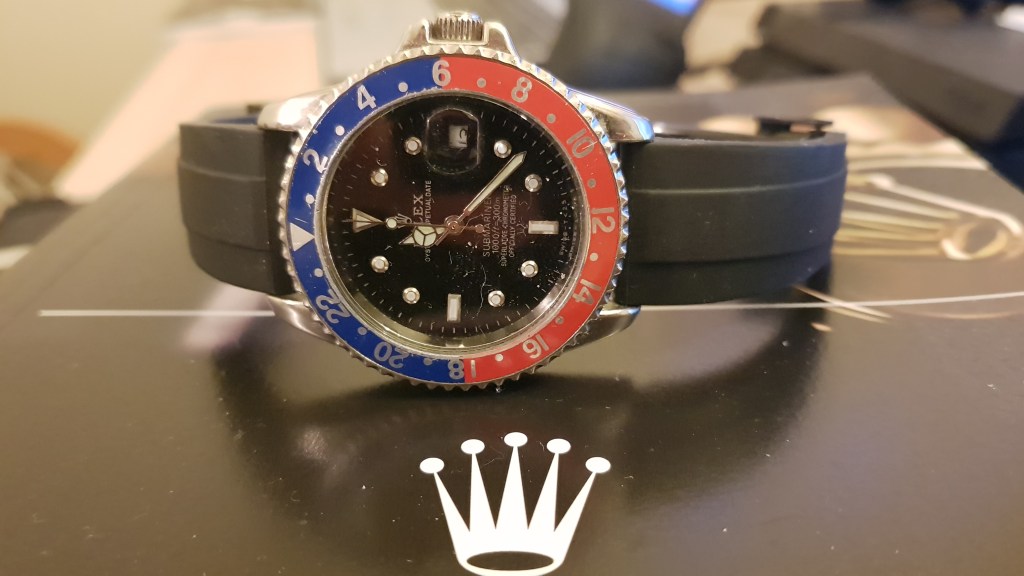
During one of those markets, I have found this small stall, with a glass case full of trinkets, stuff, and watches. One in particular grabbed me. The unmistakable Pepsi bezel of a GMT-Master II. I asked if I could see it close. And then it struck me. There was no common Rolex. In fact, there wasn’t a Rolex at all.
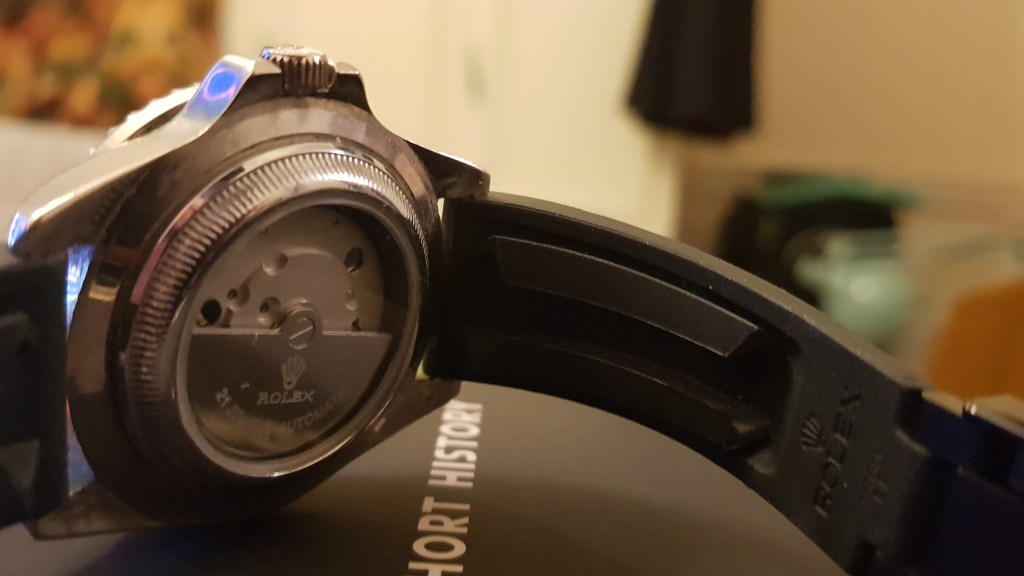
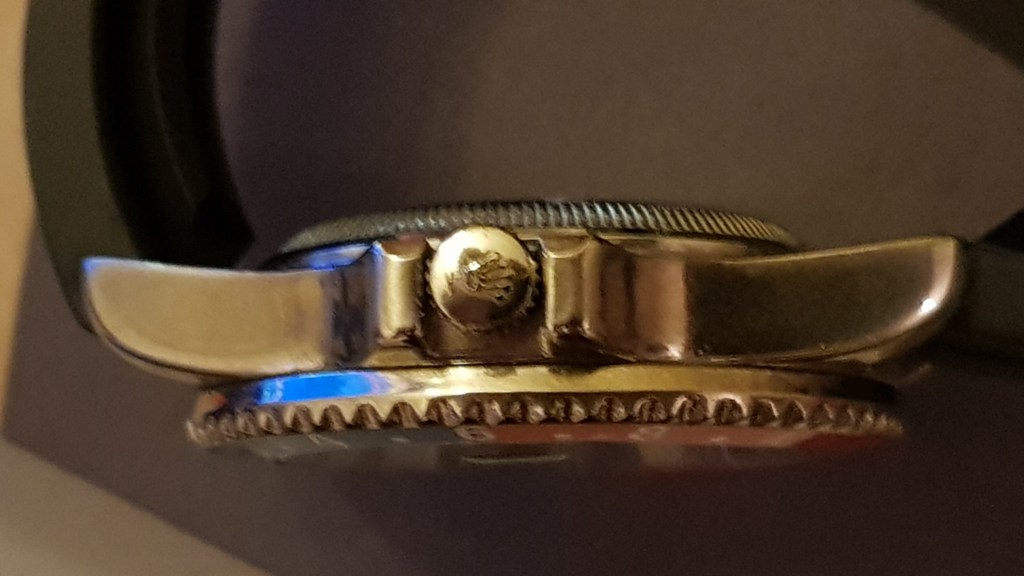
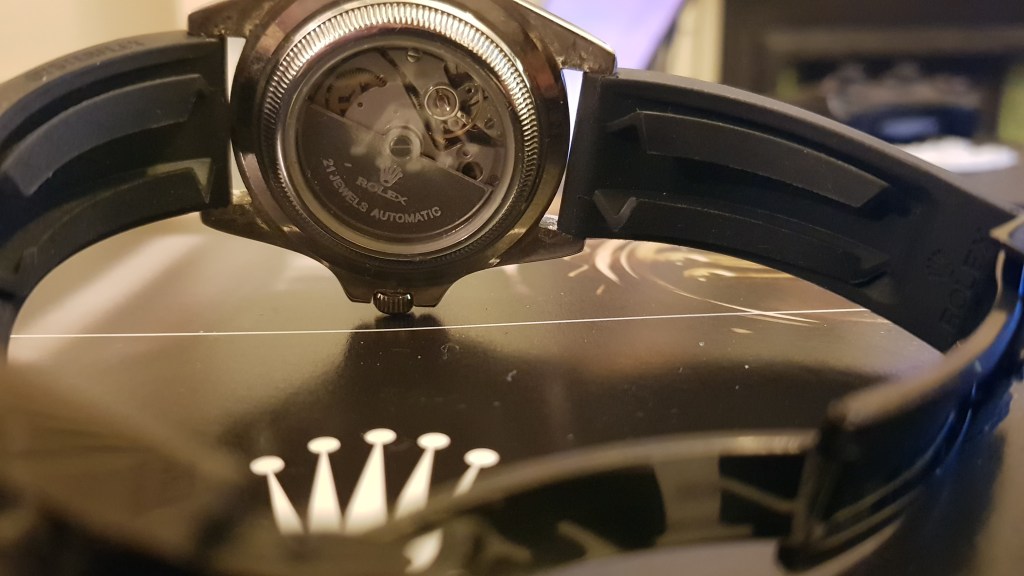
From afar, the bezel would full the majority of watch enthusiasts, but a quick glance pulled the curtain and showed what was a weird, uncanny valley sort of object. The dial reads Submariner, the magnifying glass at 3 o’clock misplaced, the crown uneven, and the open back. Not of that is of Rolex. And I am not going into details about the movement, a Miyota-like copy, unfinished and unpolished, with a audacious and flashy rotor depicting Rolex’s branding and logo. At this point, any watch connoisseur is shouting in anger and awe at the fact that even seeing all of if, all of the treacherous and ridiculous attempt of this copy to try and fool me, I still went out of my way to buy it.
Yes, and there are a few reasons for it. First of all, I bought it because it was a novelty, an interesting thin I found in the wild, an oddity that would have been bought by someone else thinking it was a real Rolex, and be worn as so.
Second reason, I found this watch at a vintage market, not in a specialised (in fakes) store or seller. The person who were selling it to me was a newcomer to the world of antiques in general, and of watches in particular. He did not know what that watch was copying, and told me that he had bought a box of antiques to start his business, and a few watches came along, including the fake Rolex. He was not trying to sell me a Rolex, nor a Rolex copy; he was simply showcasing an antique he happened to find in a box of trinkets in an abandoned house.
And finally, the third reason why I bought a rake Rolex. Because I knew what it was. Yes, I was not mislead, I didn’t fall for the sellers blabber, I didn’t think I was buying a Rolex. I got it because that is now a mark, a symbol of what not to buy, of what not to look for, and for what not to desire for a watch enthusiast.
Most replicas and fakes will put you down around at least a couple hundred pounds. Compared to the actual value of the real thing (a Submariner would start around £6,000), to pay £200 is a bargain. However, I have paid close to a quarter of that amount. It was a bargain within a bargain. For a mistake, or an anti-role model, I believe I did well.
Most replicas and fake attempts also tend to leave a bad taste on the collector’s mouth and wrist. Even though the copy looks exactly like the original, in your heart of hearts you know, and will always know, it is not the real deal. It can look the same, it can feel the same, it can even sound the same, but when you look down on your wrist, is like looking at Grand Moff Tarkin in Rogue One. It is a perfect replica, a complete recreation of the original, it walks, stands, brood, and speaks like the original, but it will never be flesh and presence of Peter Cushing. It looks good, and will fool the less prepared, but the longer you look at it, the more differences and mistakes you see.
Not this one. This is like comparing the amazingly fun and brilliant Brendan Fraser’s Mummy, with the, uninspiring to say the least, Mummy reboot. It is clear that there is a chasm between the two. One is full of joy and care, whilst the other is a paint-by-numbers, cash-grab, “fake” recreation.
Nonetheless, as Tom Cruise definitely sees the remake as a lesson, I too see this silly purchase as a masterclass on what is out there, trying to fool us all. Some with more success, some with less, way less so.
We are in an age where a lot of information is compressed, condensed, and splashed in our faces in short bursts of blabber and misconception. Long articles, with thorough writing, and stringing stories, branching from the main idea of the piece, are rare, and the source of the major part of the population’s learning and research comes from YouTube, Twitter, and Instagram. Not just that, but that is to blame as well, creates a narrow minded, hard cracking, small thinking society. However, I am not writing today about sorrow and sad times; I don’t want to be the old-fashioned, traditionalist, because I am not. I love technology, love the internet, and adore everything that moves and changes the direction of the current times. I do also love watching YouTube and fortunately, all hope is not lost, for there are many interesting, fascinating, and inspiring there. I have learned a lot about watches, movie making, games, and guitars on YouTube. It sure indeed not be your only source of information, but if you know where to look, there are a vast array of actual knowledge. And here I want to recommend the best and most interesting videos I have watched this week.
H10 Livestream: The Swiss Industry Then, Now, And Tomorrow – A Conversation With Jean-Claude Biver Jean-Claude Biver is arguably the most innovative personality of the modern age of Swiss watch manufacture. From the purchase and rebirth of Blancpain, to his position in some of the most renowned watchmakers in the world, such as Audemars Piguet and Hublot, to his perception of life, time, and the future, listening to Biver talk is something out of this world. There are very few people in the industry that has both annoyed and disrupted the watch industry, and is adored by the whole watch community. He can speak about anything with so much passion and energy, that even if you don’t like watches, this is a very important conversation to watch. And Hodinkee is an amazing place to learn.
You’ve Never Seen A Rolex Defect Like This | Watchfinder & Co. Watchfinder & Co. is one of my favourite places on YouTube. The simple but thorough reviews, the minimalist but complete presentation, is a must follow for any watch lover. This video in particular is quite interesting. We normally perceive watches and watchmaking as an inhuman craft. So perfectly created, so unequivocal design, such precision to the micron, that we forget that behind the scenes, there are people putting those pieces together. And it is particularly funny that of all brands, to show a failed conception on a Rolex gives us some perspective on the watch industry, and brings us a little closer to the heart of this amazing industry. I will not tell what is the mistake, and I have to say, it took me longer than I would like to confess to find the mistake.
Watchmaker Breaks Down Swiss vs Japanese Made Watches | WIRED This is an incredible video, that I tend to watch at least once every a couple of months, so I can droll and awe to the mind boggling engineering and thought that is put into creating a watch. And to be able to follow a high skilled watchmaker strip a Japanese (Miyota) and a Swiss (ETA) movements and see how two different schools of craft created similar yet distinct pieces. The first time I watched this video, around a year ago, was also the first time I’ve seen the main spring fully unravelled, and it is incredible.
Making-of a ticking icon: PANERAI Submersible Bronzo – 47mm. PAM00968. Another stripped-down watch, but this time on the other direction. If you are interested in the least into watchmaking, you will know of Panerai, and that the Submersible is one of the Italian brand’s most famous model. The 2019 Bronzo Submersible is as Panerai as a watch can be: sturdy, chunky, classic, and solid. And watching that watch been made from a solid bronze puck is fascinating.The narration is also quite interesting and fun. Watch Advisor is very nice and knowledgeable channel, and listen to the excitement of the narrator throughout the whole video is so nice, and will leave you with a smile on your face and a unnatural desire to go out and buy a Panerai.
The non-Watch video: Bad Lip Reading – not the future If you like Star Wars, bad lip reading, and amazing 80s inspired music, this is one of the most amazing, funnest videos on YouTube. It’s just so well made, and musically is remarkable and as good, if not better, than the majority of the music made today. A must watch.










 The Column Wheel