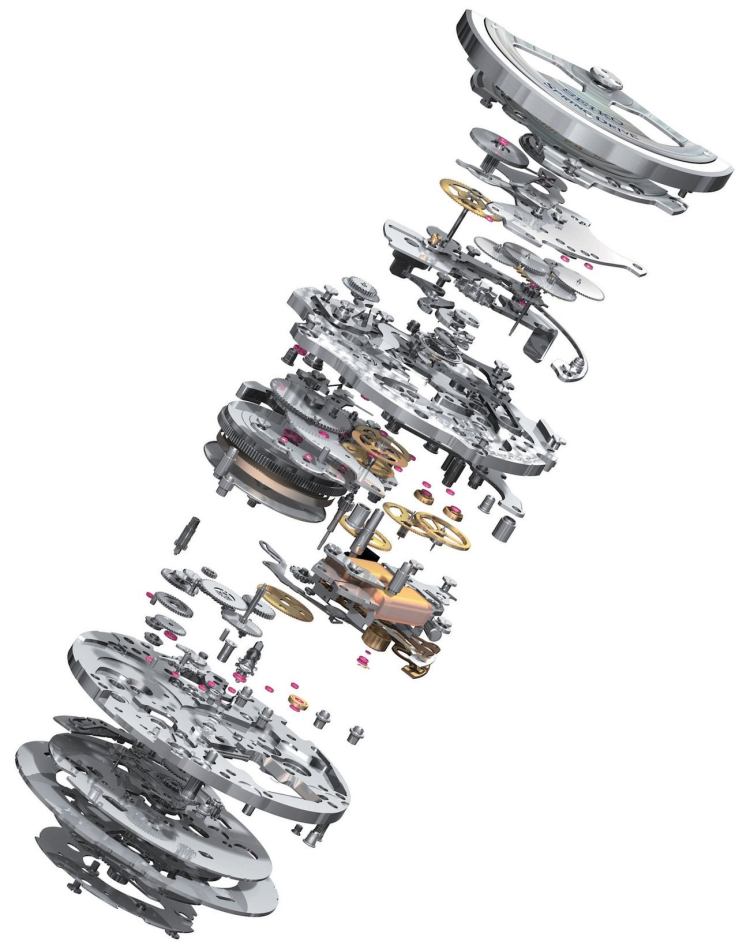
I have been fascinated by watches for a long time. With my first ever paycheck, I went to a local jeweller in Sao Paulo, Brazil, and spent a too big amount of money on a watch. At the time, I was more interested in how the watches looked and felt, than on the heartbeat of the movement, and I then bought a quartz-movement timepiece, by a fashion brand, with a couple of complications, such as a small date dial, a chronograph, and a small seconds. For a quartz watch, it was definitely the more interesting and more attractive than any other watches I have seen at the store. I cannot remember if there were any mechanical watches in that store, I could only see the one I found for myself.Of course there were more watches, automatic, manual winding, complications, tourbillons, moon-phases. But at the time, none of that have yet caught my attention. It was the looks more than the content that made me buy it. A quartz watch. A movement most of the time renegaded to the child, the young, the beginner who doesn’t know better, to the fashion brand that makes cheap watches for the popular markets. That was the main spark that has introduced me to the world of watches. And just for that, because of that small spark, I believe that quartz watches should be considered as serious and as professional and as precious as any other mechanical watch out there.That might sound as heresy, that might sound like an apologetic, who is protecting the right to buy quartz watches because he doesn’t have the money to buy the more engineered, more elaborated, more intricate mechanical masterpieces. And to that I say: yes!That should not be an excuse however. Why should someone be excluded from a world so full and so rich as the watch making universe, just because he or she cannot purchase a Patek Phillipe Calatrava, or a Hublot Big Bang, or the magnificent Audemar Piguet Royal Oak? I love guitars, and of course, I adore the boutique, high-end guitars. Guitars like American made Fenders, or Japanese masterpieces by Ibanez, or the Dutch new masters of Aristides. I know a lot about them, I research them, I follow the new releases, and I engage in discussions. I don’t own a full collection of high end guitars. I own one American made Fender and a McCarty PRS, but still one of my favourite guitars is a Student Edition PRS I bought a month after I moved to Bath. If was a gift from my parents due my PhD graduation and the start of my new job. And still, I manage to start a project dealing and organising events around unique and high-end guitars. No one judged me for my cheap guitars, but embraced me for my love and interest in the craft of guitar making.What about watches then? Yes, watches are synonym of wealth and luxury, and there is a baggage on the whole concept of watchmaking as a craft and art, more than simply technology and accuracy. I might not have enough money to one day have a Vacheron Constantin, but I sure do know so much more about watchmaking, about its heritage, and the importance of artistry within this craft because I bought and collect more affordable, quartz watches.I am not trying to do a defence on quartz watches, but simply sharing my own story through the world of high-artistry (I don’t like to call it high luxury) watchmaking. Quartz, Spring Drive, Solar, Kinetic…what that reminds me of? Or course, the main culprit of the quartz crisis of the 1970s, the Japan giant Seiko. I really like Seiko. As a brand, it has made so much for the watch industry. It has created some of the most important and revolutionary technologies of watchmaking and has developed the industry in both mechanical and digital paths. The first quartz watch, released in 1969, have put the watch world on edge. Some have tried to put down quartz as a lesser movement, others tried to follow the path established by the Japanese brand, and create their own quartz watches; some others, like Jean Claude Biver and Blancpain, have decided to go totally against this development, and put a new breath into mechanical, highly skilled made timepieces. Nevertheless, no one can deny that Seiko and quartz have indeed shaped the watch world, inspiring both quartz and mechanical followers at the same time.And by its thirst to innovate constantly, Seiko has brought both timelines into a single movement, the Spring Drive. Released in 1999, the mechanical/quarts hybrid merges the accuracy of quartz with the artistry and craftsmanship of the mechanical movement. Since then, the movement is a trademark of the brand, being the flagship of the Grand Seiko since 2005.In the end, this first post is a love letter to watches in general, to my beginning with a cheaper, quartz movement, until my small collection of fine and popular mechanical and quartz watches, from Rolex to Seiko 5 Automatics, looking forward to more and more interesting timepieces to own, discuss, and enjoy.
 The Column Wheel